
Your cart
There are no more items in your cart
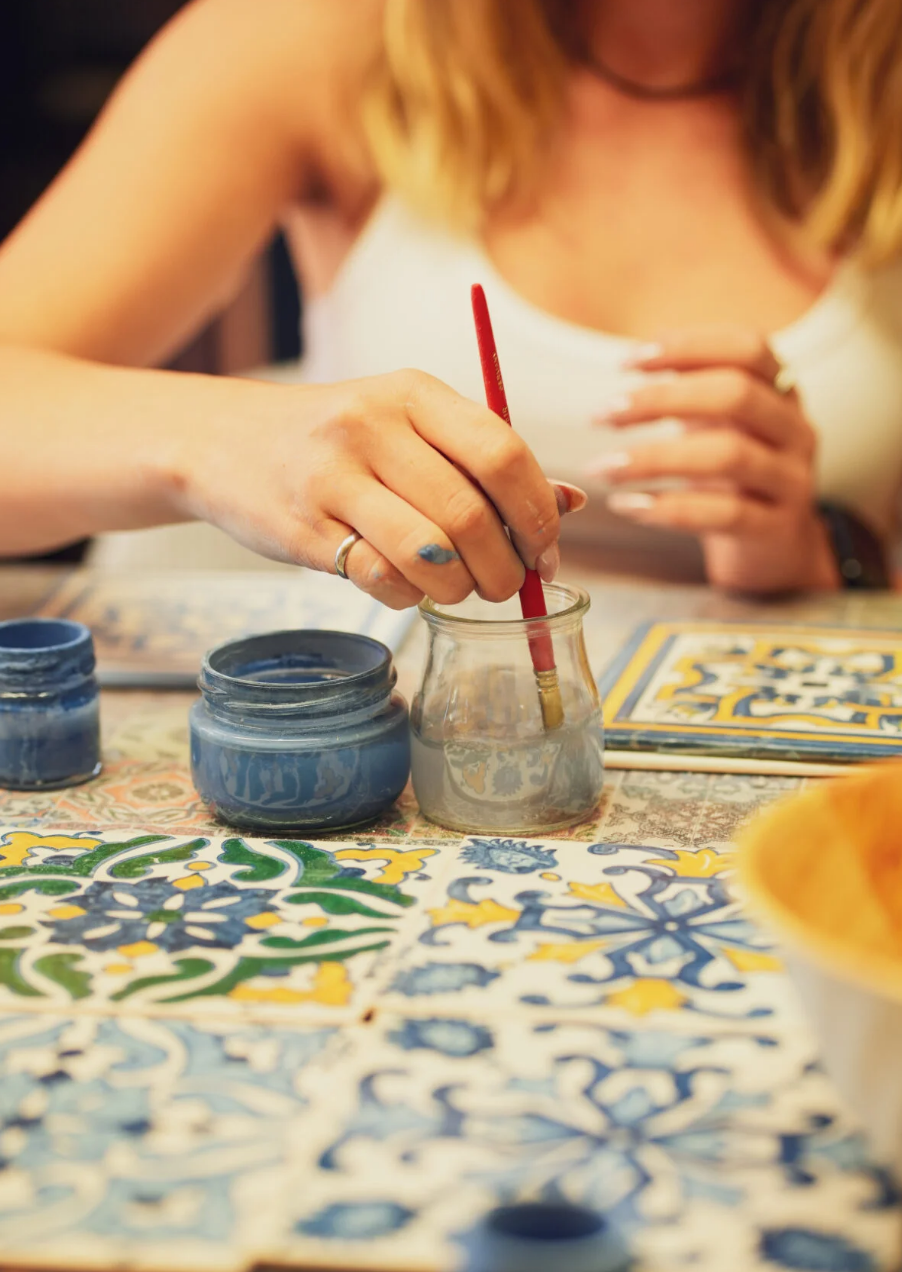
Al-zulaydj: A Polished Stone That Changed Everything
The word azulejo comes from the Arabic al-zulaydj, meaning a small polished stone. Despite appearances, it has nothing to do with azul (blue in Portuguese) — the name refers to the technique itself, not the colour. The first tiles arrived in Portugal with the Moors, whose presence extended until 1289. Geometric, restrained, repetitive — they adorned palaces and places of worship.
By the 15th and 16th centuries, Portugal was opening up to the world. Flemish, Italian and Moorish influences converged. The azulejo transformed: it became figurative, narrative, monumental. Religious scenes, battles, sweeping landscapes spread across entire walls.
After the 1755 earthquake that devastated Lisbon, azulejos played a critical role in the city's reconstruction. Waterproof, fire-resistant, and easy to produce at scale using stencils — they clad the façades of the rebuilt Baixa district and entered homes as a symbol of modernity and protection.
"The azulejo is so closely associated with Portugal that its very presence is enough to evoke a distinctly Lusitanian atmosphere, even far from its shores."
Where to Find Lisbon's Most Beautiful Azulejos?
The National Tile Museum — Madredeus
Housed in the former Convent of Madre de Deus, founded in 1509, the Museu Nacional do Azulejo is an unmissable stop. Its collection spans five centuries of ceramic art, with more than 7,000 pieces. The centrepiece: a 23-metre panel depicting Lisbon before the 1755 earthquake, made up of 1,300 tiles. The museum sits in the Madredeus neighbourhood — the very same area where Caroline runs her workshops, just a few streets away.
.jpeg)
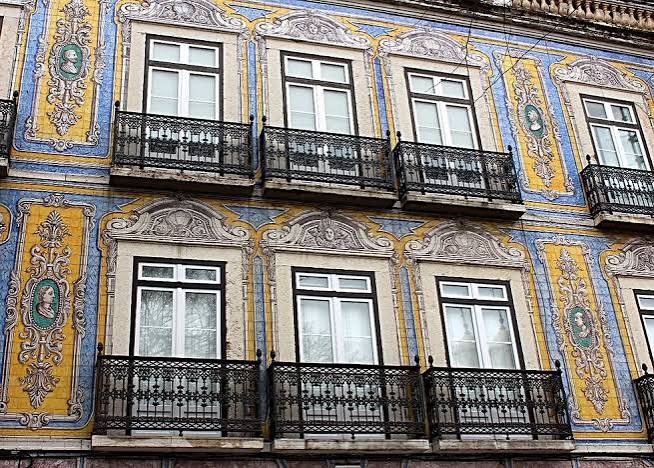
On the Streets — The Azulejo Hunt
Alfama's cobblestoned lanes, the Convent of São Vicente de Fora, the Viuva Lamego factory façade, metro stations Oriente and Alameda, the Fronteira Palace — Lisbon is an open-air museum. Decoding that visual language is precisely what the PickPocket Lisbon card game is designed for.


♠ PickPocket Lisbon — Card in the Game
In the PickPocket Lisbon card game, the azulejo card belongs to the Heritage suit. It maps the most striking tile-clad addresses in the city.
Caroline's Workshop — Paint Your Own Azulejo in Madredeus
A short walk from the Museu Nacional do Azulejo, in the Madredeus neighbourhood, Marie Caroline Vidal welcomes those who want to go beyond admiring tiles on walls. French or English, complete beginner or ceramic enthusiast — her workshop adapts to every participant with patient, generous teaching and a genuine love of passing on the craft.
The session opens with an introduction to the history of azulejos: their Arabic origins, their transformation across the centuries, the different styles that shaped Lisbon's streets. Then it's time to get your hands dirty. Armed with a blank tile, pigments and brushes, participants create their own composition — classic geometric patterns, floral motifs, or something entirely invented. Caroline guides every brushstroke, explains colour-layering techniques and the subtleties of line work, and shares her favourite addresses around the city to keep exploring afterwards.
At the end of the session, the tiles go into the kiln. A few days later, you leave with two unique, handmade pieces — a far more personal souvenir than anything you'd find in an Alfama gift shop.
Practical Information
|
Address |
Rua da Margem 7B, Madredeus, Lisbon |
|
Duration |
Around 3 hours |
|
Languages |
French & English |
|
Level |
All levels — no artistic experience needed |
|
What you take home |
2 fired tiles, ready after kiln |
|
Materials |
Everything provided on site |
How the Workshop Unfolds
|
1 |
Introduction History of azulejos, Arabic origins, techniques and styles across the centuries |
|
2 |
Choosing your design Classic geometric, floral, or freeform composition — your choice |
|
3 |
Drawing & painting Tracing, applying pigments, finishing — guided by Caroline at every step |
|
4 |
Kiln & collection Tiles go in for firing; pick up a few days later or arrange delivery |

What Participants Say
"An unforgettable experience. Caroline shares the history of azulejos with real passion before guiding us step by step. Even with zero artistic talent, the result is stunning." — GetYourGuide traveller ★★★★★
"In 3 hours you learn the history, the techniques, and leave with your own tile. It's informative, fun, and done in a wonderfully warm atmosphere." — Vanupied.com ★★★★★
Book the Workshop
→ Book on GetYourGuide (getyourguide.com)
→ Book on Airbnb Experiences (airbnb.com/experiences/7100407)
8 Marvila — Lisbon's Brooklyn, a Short Walk from the Workshop
Ten minutes on foot from Caroline's studio sits one of Lisbon's most energetic addresses right now: 8 Marvila. This 22,000 m² complex occupies the former Abel Pereira da Fonseca wine warehouses, built around 1910 and long central to Lisbon's wine economy. Now reborn as a temporary cultural hub, it's the eastern counterpart to LX Factory — rawer, less polished, more alive.
Entry is free. Inside: independent designer boutiques, vintage clothing, an analogue photography studio, a bicycle restoration workshop, a tattoo studio, bars, food trucks and the restaurant MATO. Come evening, the space shifts — concerts, themed events and clubbing at Outra Cena, a concert hall whose industrial architecture draws comparisons to Berlin's club scene. The original wine vats (cubas) have been kept and repurposed as shop units and décor.
"A post-industrial space with an edge still intact — the kind of place where Lisbon is reinventing itself right now, before the developers move in."
Getting to Madredeus
Madredeus sits in eastern Lisbon, between Alfama and Santa Apolónia station. From the city centre:
• Blue metro line — Santa Apolónia stop, then 10–12 minutes on foot
• Bus 794 — Igreja Madre de Deus stop, 2 minutes' walk to the workshop
• Tuk-tuk or taxi from Alfama — around 5 to 8 minutes
Lisbon's azulejos don't ask to be looked at — they ask to be read. The PickPocket Lisbon card game is designed to help you read this city differently. And Caroline's workshop is the place to leave with a piece of it, made by your own hands.